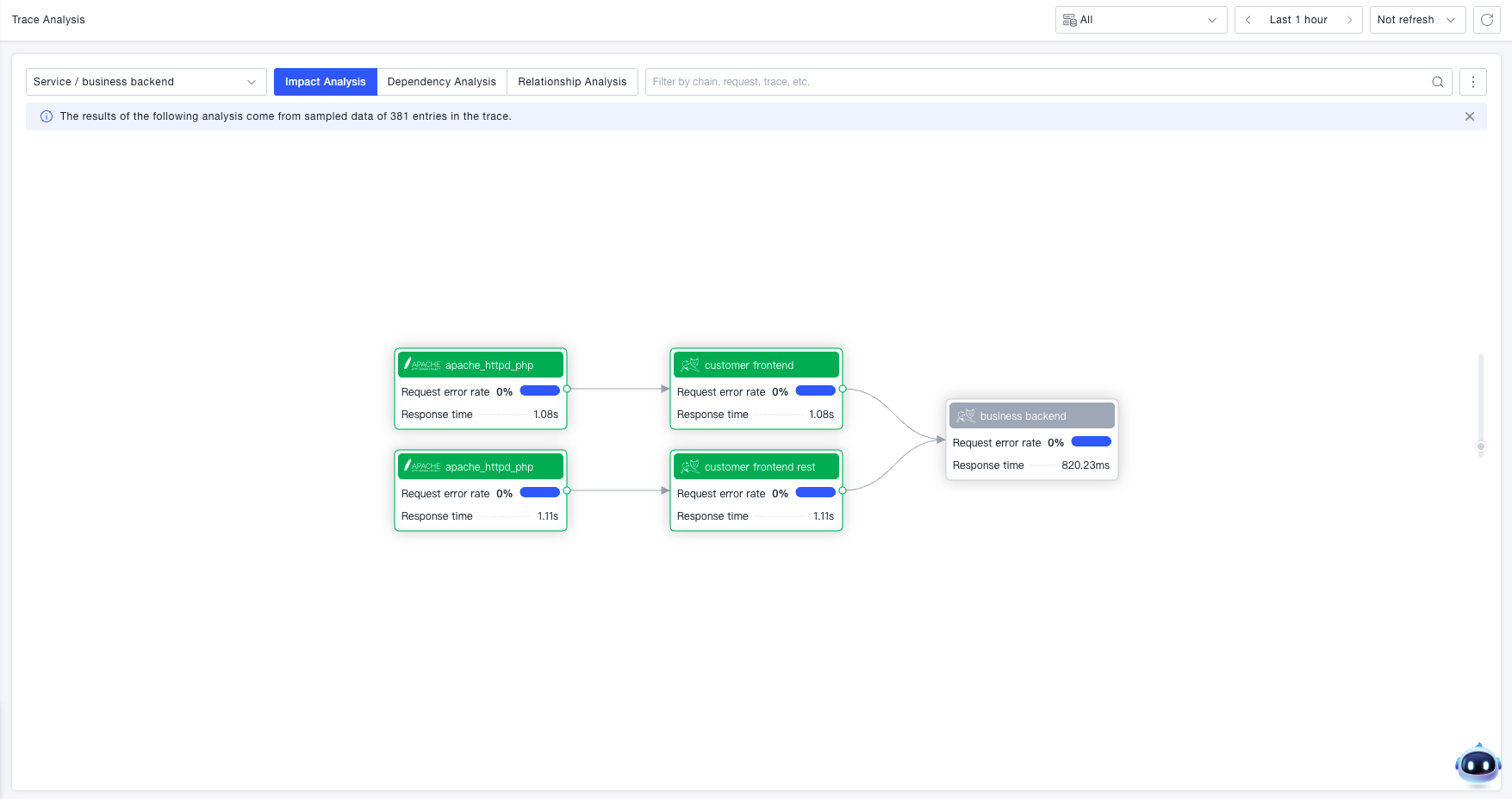
impactanalysis
In the fields of IT system operation and maintenance, change management, and fault governance, Impact Analysis is a specialized analytical technology that evaluates the potential scope and extent of impact of events such as "system changes, fault occurrences, and resource fluctuations" on "business functions, user experience, and associated systems". Its core functions focus on "early risk prediction, accurate identification of impact boundaries, and assistance in decision-making priorities", including specific capabilities such as: visual organization of impact scope; quantitative assessment of impact severity; and tracking of fault propagation paths.
Usage Scenarios
- Emergency Response to Production Faults: When a service (e.g., inventory service) crashes suddenly and triggers a large number of alerts, the operation and maintenance team needs to quickly determine "which businesses are affected by the fault and whether emergency capacity expansion or rollback is required" within a short period to prevent further losses caused by fault propagation.
- Impact Assessment of Resource Fluctuations: When abnormal resource fluctuations occur in the system (e.g., "CPU usage of the payment service surges from 30% to 90%" or "network latency increases due to insufficient bandwidth of cloud servers"), it is necessary to judge "whether the resource fluctuations will affect the business and whether emergency capacity expansion is needed".
- Architecture Adjustment and Dependency Governance: When system architecture adjustments are required (e.g., "splitting a monolithic e-commerce system into three microservices: User, Order, and Product" or "decommissioning the outdated 'SMS Notification V1 Interface'"), it is necessary to confirm in advance "whether the adjustment will affect existing businesses and whether systems dependent on this interface have completed migration".
Get Started
- Navigate to the System Services -> Invocation Analysis -> Impact Analysis page. Impact Analysis aggregates call chains within a specific time range to form a service flow. It traces the specific order in which a single service is called by other services in the form of a chain, thereby helping to understand which applications and user operations trigger the service.