Services
The ONE platform provides comprehensive service observability. For processes equipped with agents, the platform automatically identifies and categorizes them based on service detection rules (process group detection rules). Services can be analyzed from dimensions such as interfaces and service instances.
For service detection rule configuration, please refer to Analyze Core Business Flow
Service Analysis
Anomaly Identification
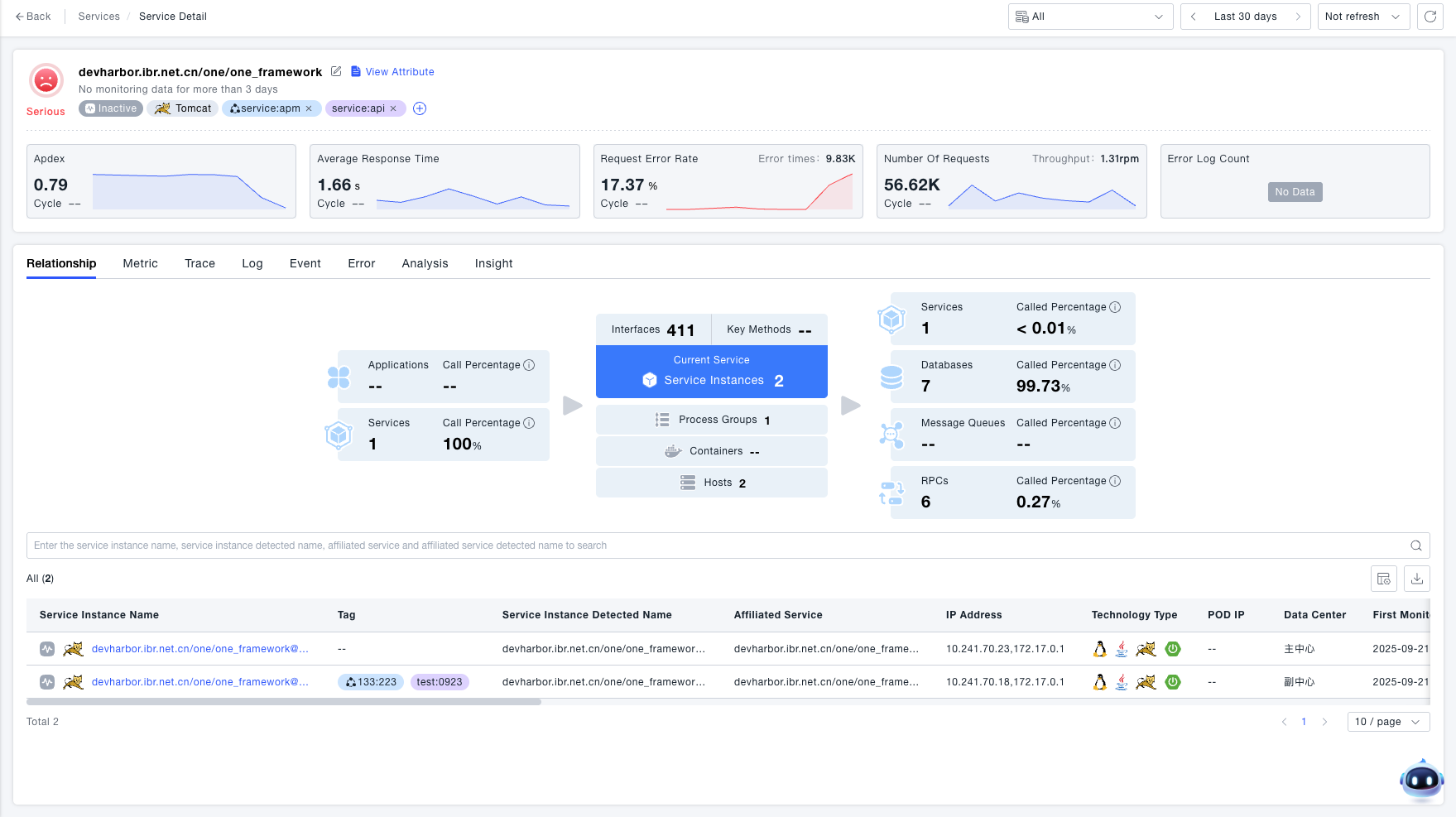
During daily monitoring, operations personnel can quickly compare metrics like average response time, error rate, and throughput rate using the service statistical bubble chart and list data. Combined with alert indicators, this allows for rapid identification of severely anomalous services.
Drill-Down Analysis
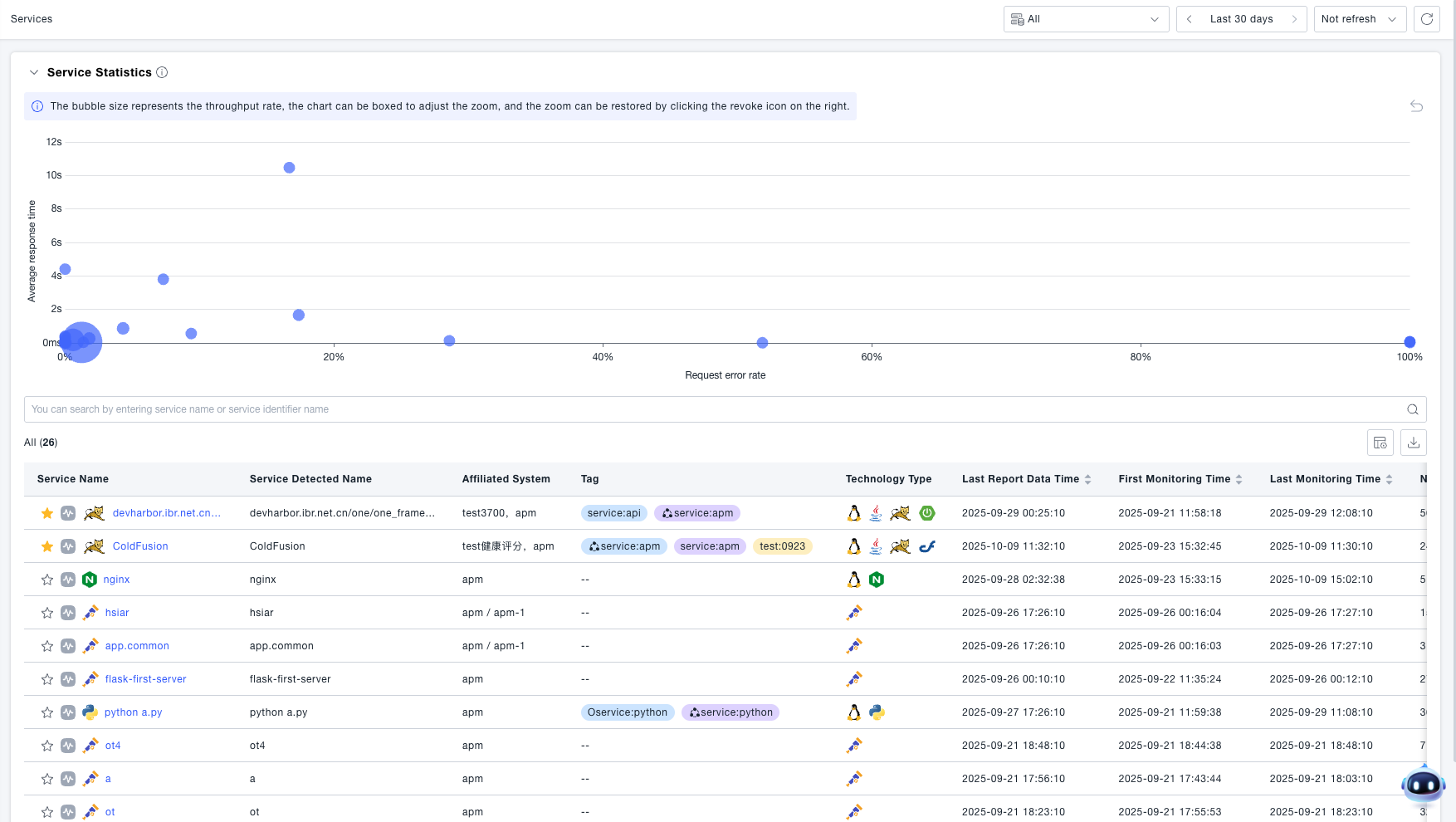
Provides functionality to view service relationships, metrics, traces, logs, events, errors, alerts, analysis, and insights. You can intuitively assess the current operational status of a service by examining its horizontal and vertical relationships, metric data, captured error information, platform alerts, and platform insights.
Relationships
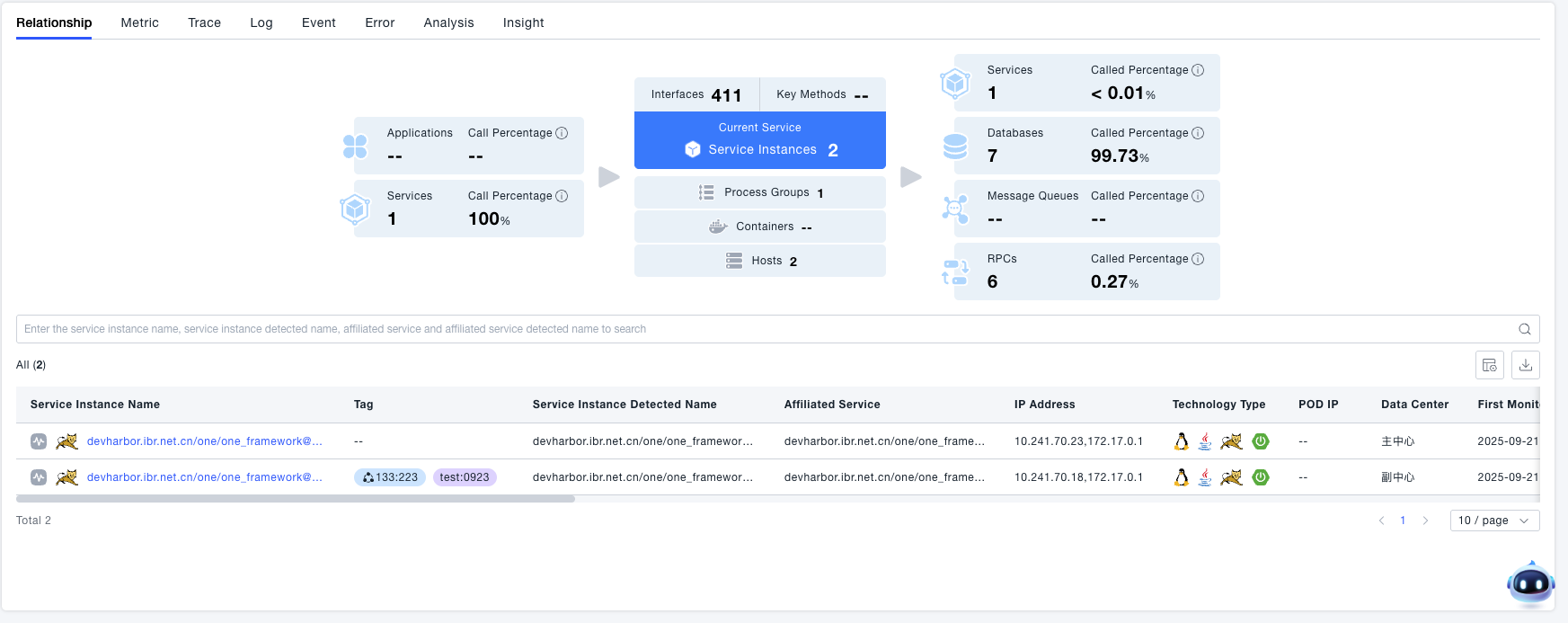
Horizontal and vertical relationships help pinpoint request sources and targets, providing a clear view of the associated process group, container, host, as well as interfaces and key methods identified for this service. For more detailed logic, refer to Systems.
Vertical Architecture
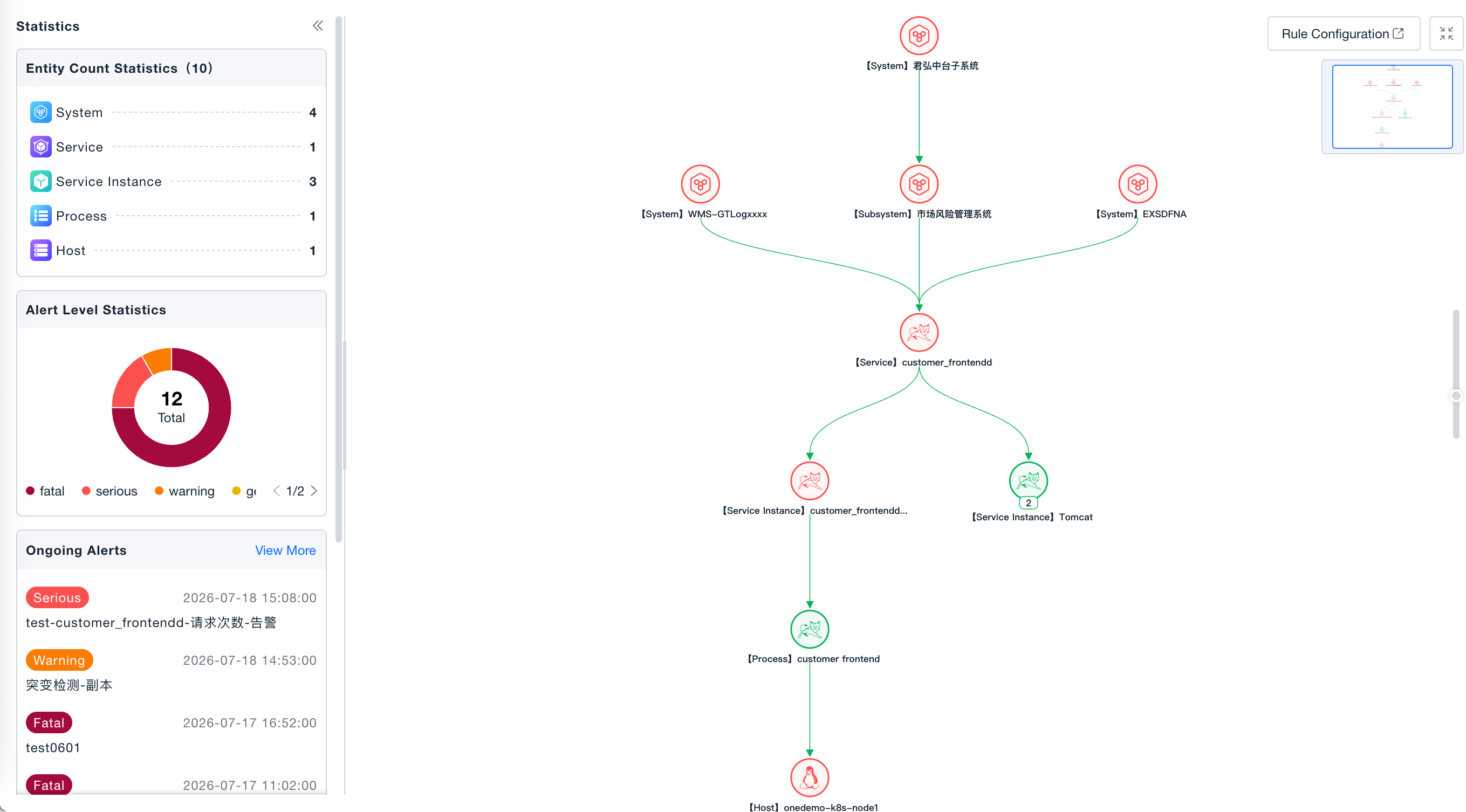
View the vertical architecture topology of the service, which allows for in-depth analysis of service-associated entities, while supporting the combination of alert conditions to locate abnormal entities. For more detailed logic, refer to Systems.
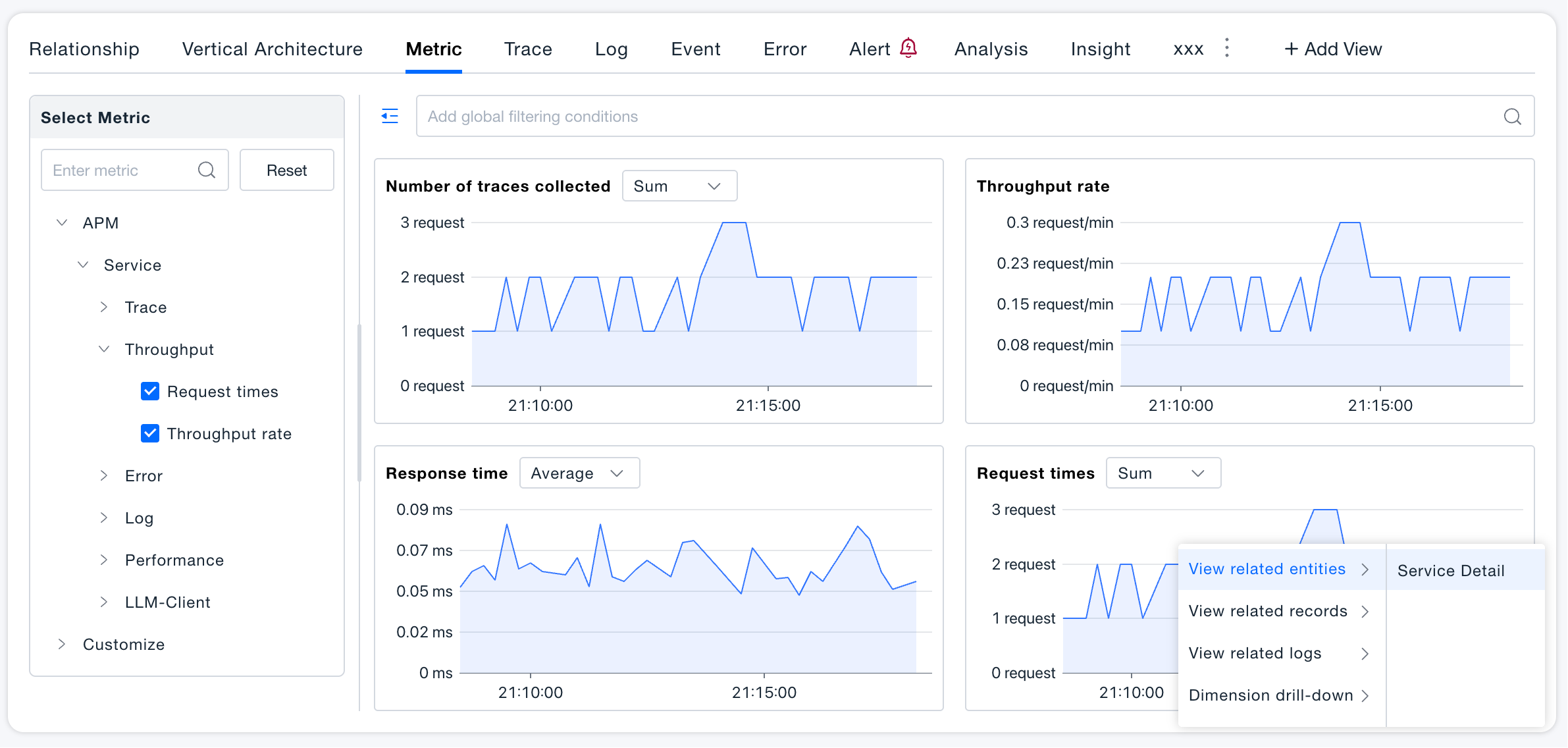
Metrics
- View the performance of various metrics for the current service over the selected time period.
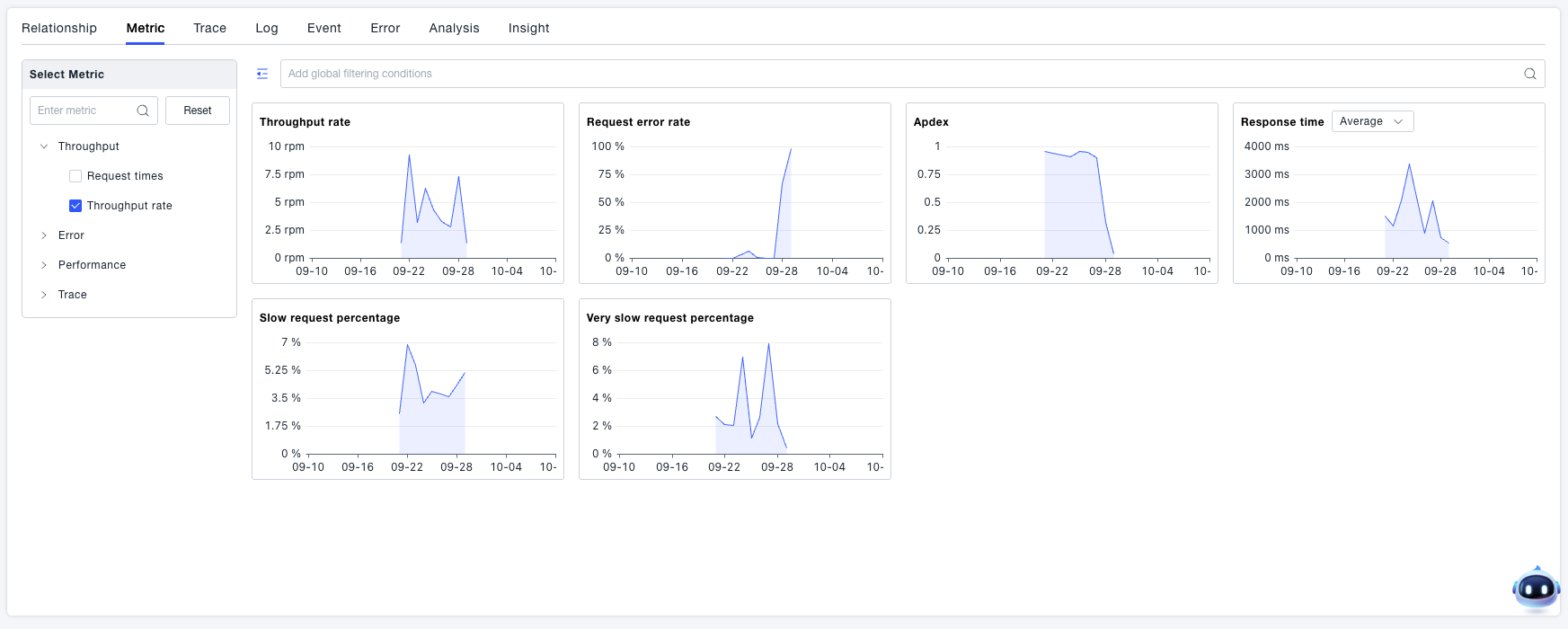
- Perform drill-down, correlation, and tracing on metrics to view related entities, related records (traces), related logs, and dimensional drilling.
Events
View events related to the current service, such as agent circuit breaking, process starts, exits, and crashes.
- View event status, source, severity level, and type.
- Click on an event to view its detailed information, analyze its attributes in depth, and perform event comparison.
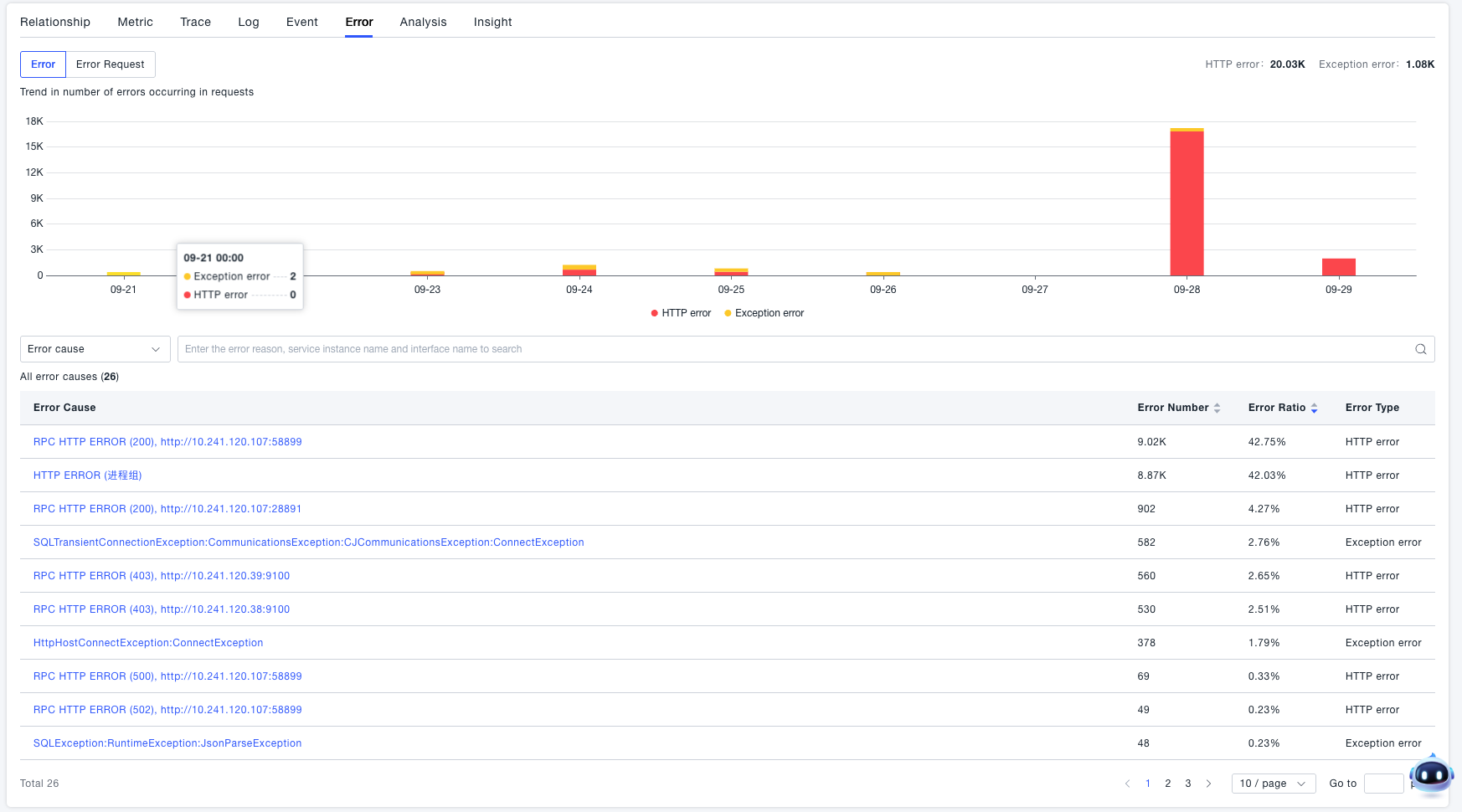
Errors
- View trends for the number of errors occurring in requests and the number of requests that encountered errors.
- The error list aggregates all error records for the current service by root cause. One root cause can encompass multiple error records. By default, data is grouped by error cause; you can also choose to view by service instance or by interface to see the error count, percentage, and type for each record.
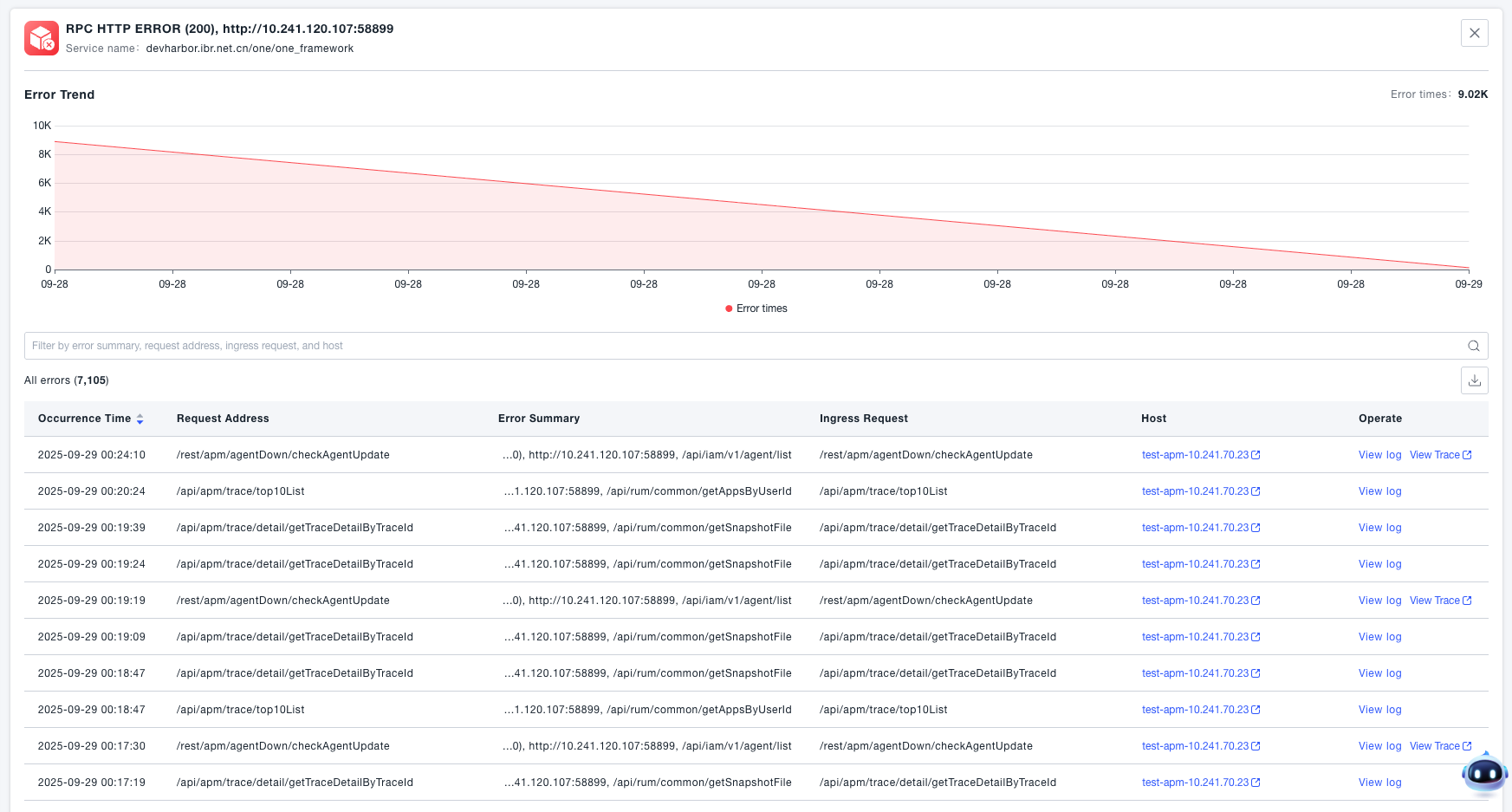
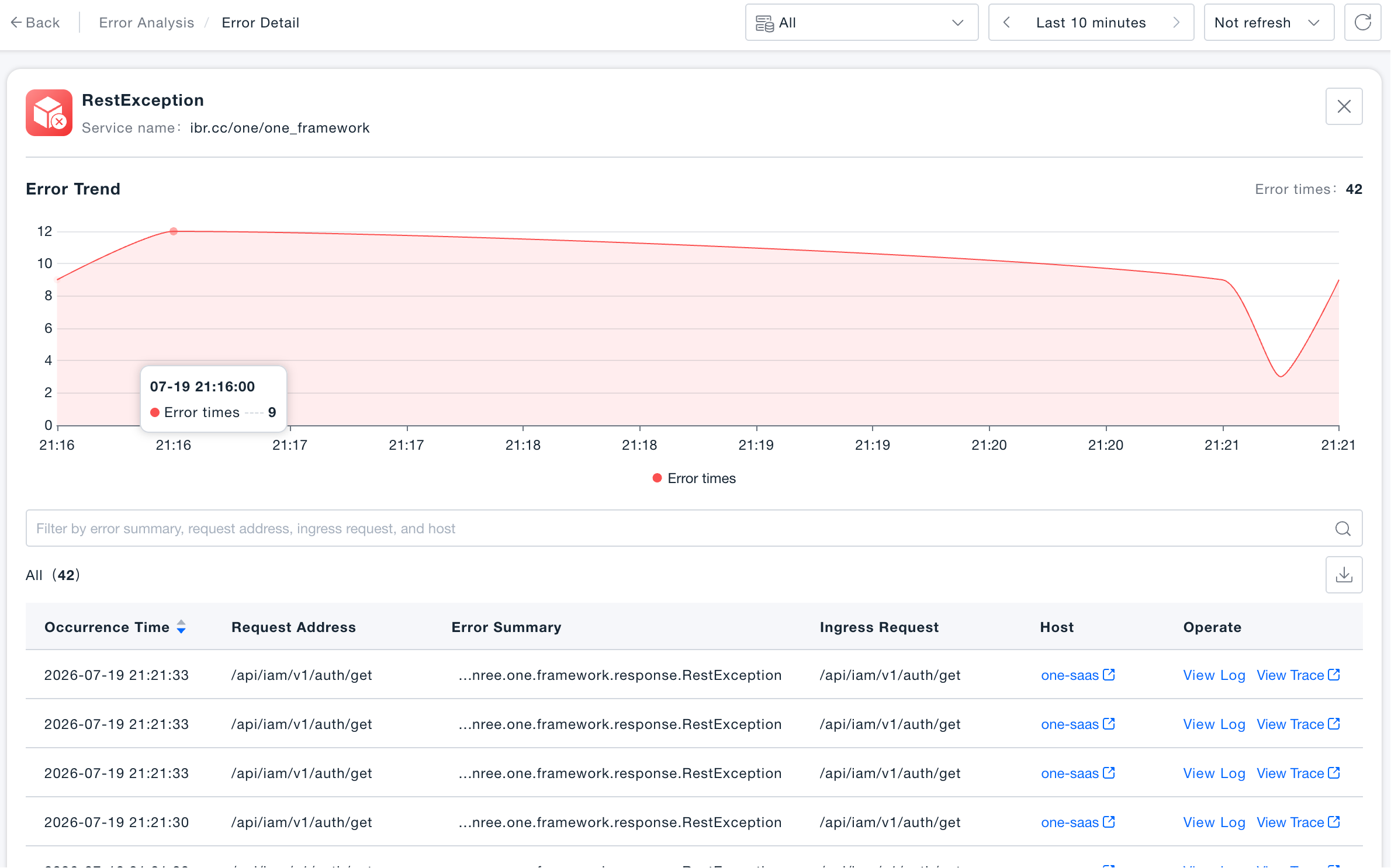
- Click on an error cause to view corresponding error details for in-depth analysis. This includes the error trend for the current service during the selected period, a complete list of all occurring errors with details like request URL, error summary, entry request, and associated host. This can be combined with error logs for precise analysis.
Alerts
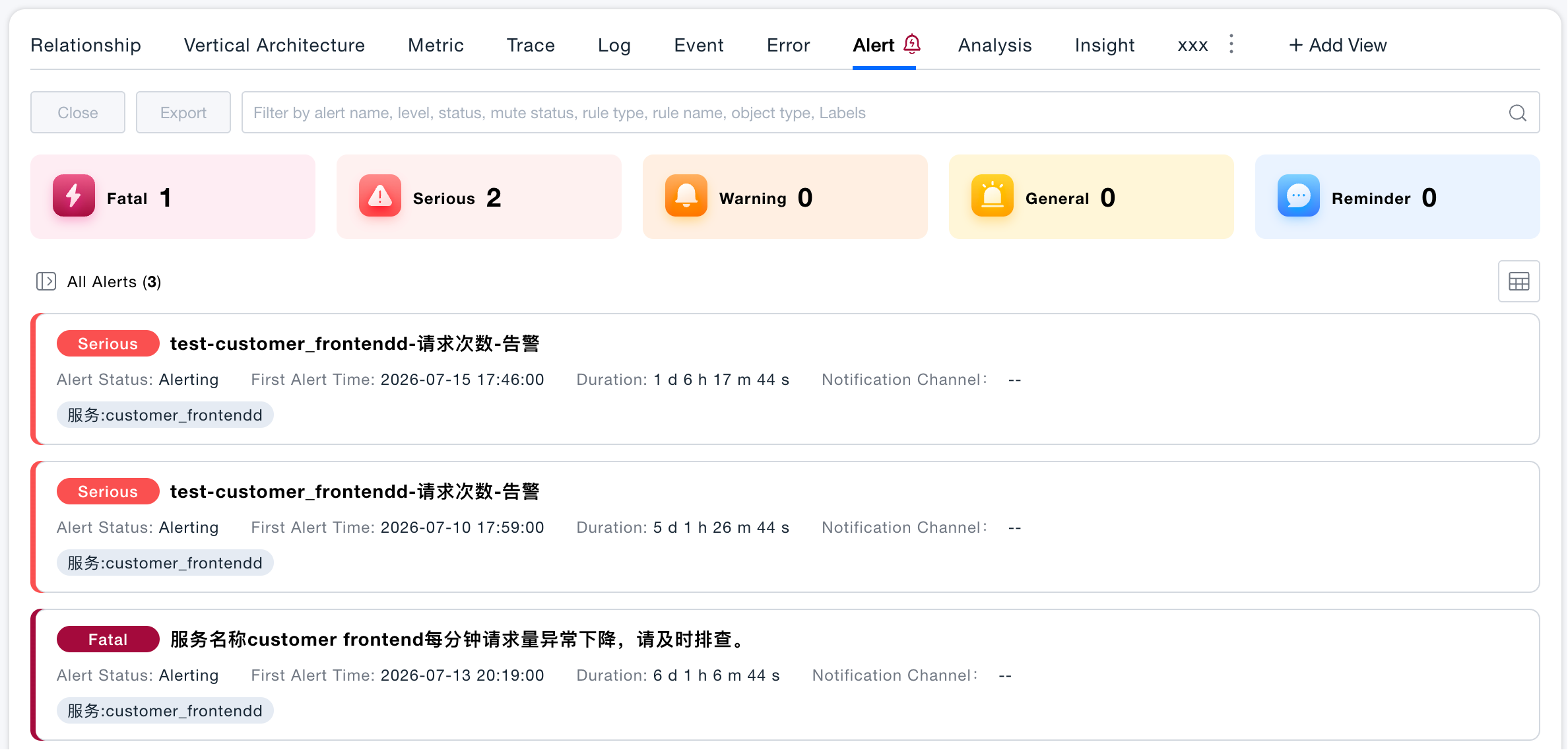
View all alerts with status "Alerting" or "No Data" for the current service. The list includes alert name, alert level, detection rule, alert status, occurrence time, and other information, supporting multi-field filtering and data export.
Analysis
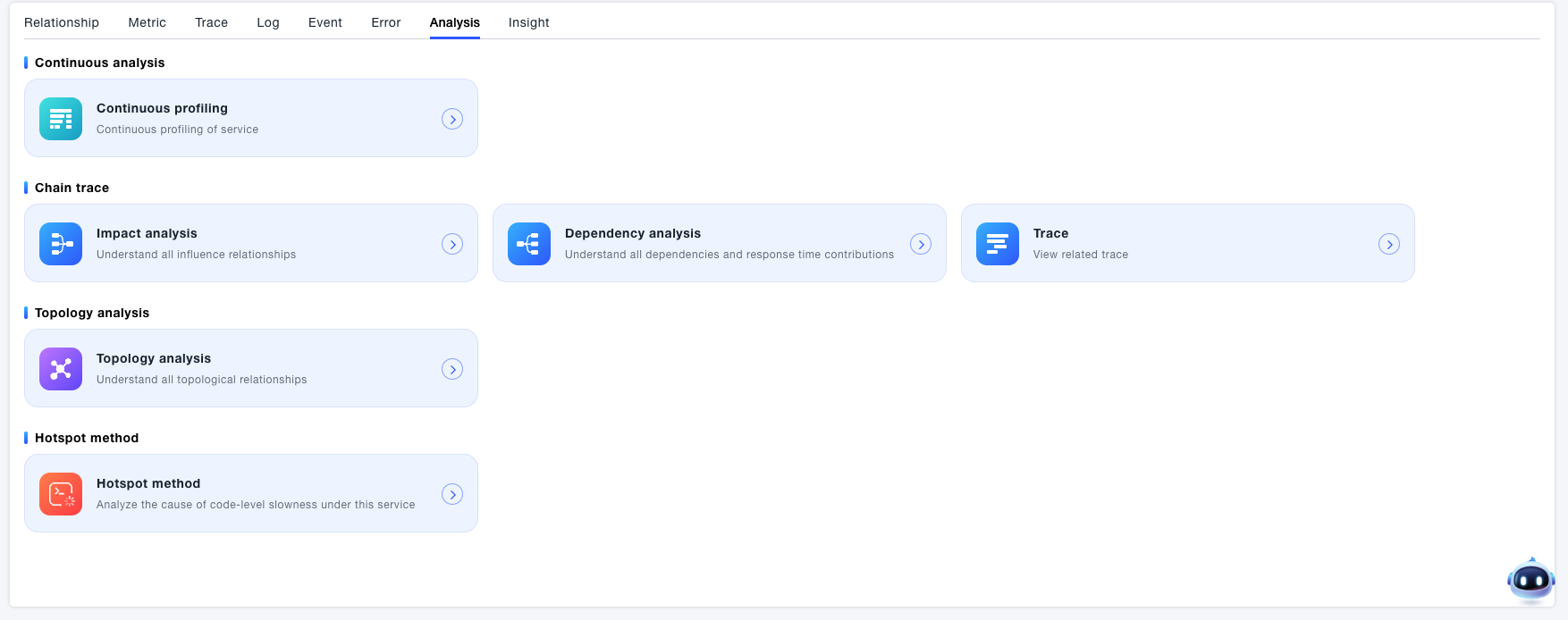
Choose to perform Continuous Profiling, Trace Analysis, Topology Analysis, or Hot Spot Method Analysis for the current service.
- Continuous Profiling: Click to navigate to the Continuous Profiling feature for ongoing analysis of the current service.
- Trace Analysis: Conduct impact analysis and dependency analysis for the current service, and view related traces.
- Topology Analysis: Click to navigate to the Global Topology feature to view the call relationships of the current service.
- Hot Spot Methods: Perform hot spot method analysis for the current service. For details, see Hot Spot Methods.
Insights
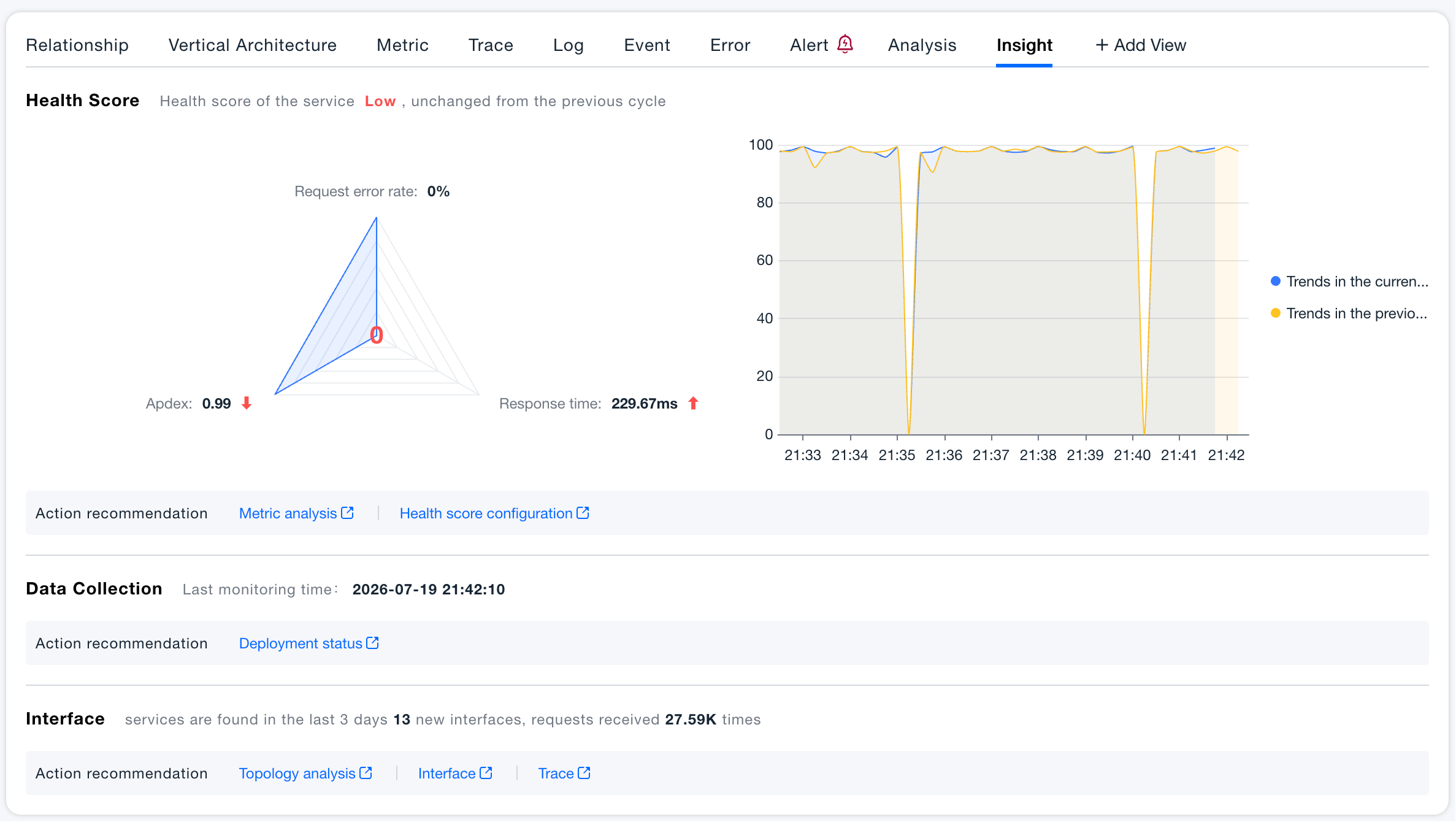
View the current service's health score, data collection status, etc. The "Action Recommendations" section supports further analysis.
- Health Score: View the current service's health score, the contribution of various metrics to the score, and a trend chart for the selected period.
- Action Recommendations: Click to navigate to the Metric Analysis feature or the Health Score Configuration feature for in-depth analysis of service metrics and configuration of the health score.
- Data Collection: View the last monitoring time for data and click to navigate to the Deployment Status feature.
- Interfaces: Click to navigate to Topology, Interfaces, and Traces features for multi-dimensional analysis of the current service.
Traces & Logs
Similar to the Traces and Logs sections in the System drill-down, you can view data related to the current service. This section will not elaborate further; please refer to Systems
Custom Views
Referencing the custom view capabilities of system details, the service details page also supports " + Add View " to quickly create and configure custom views. For more detailed logic, refer to Systems