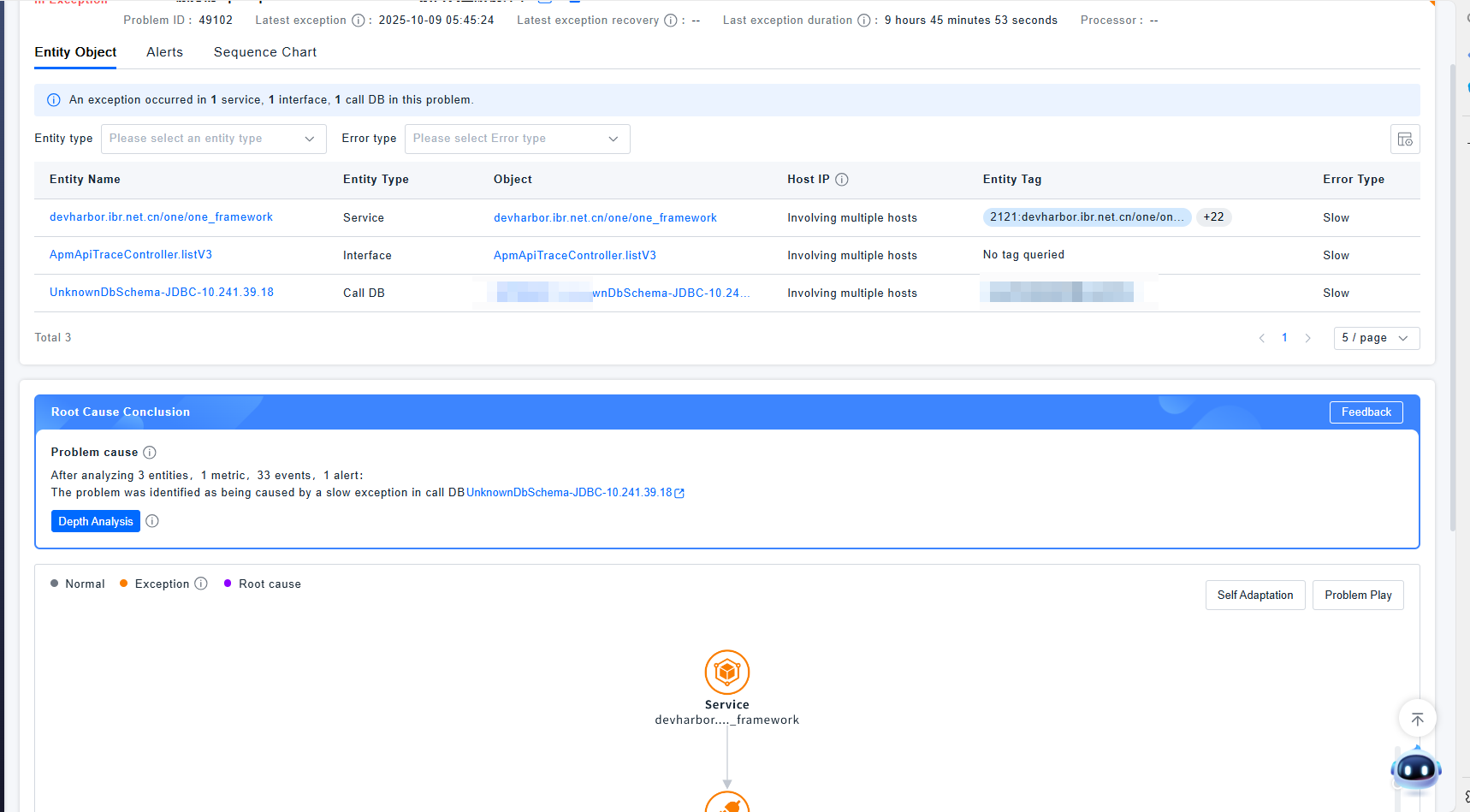
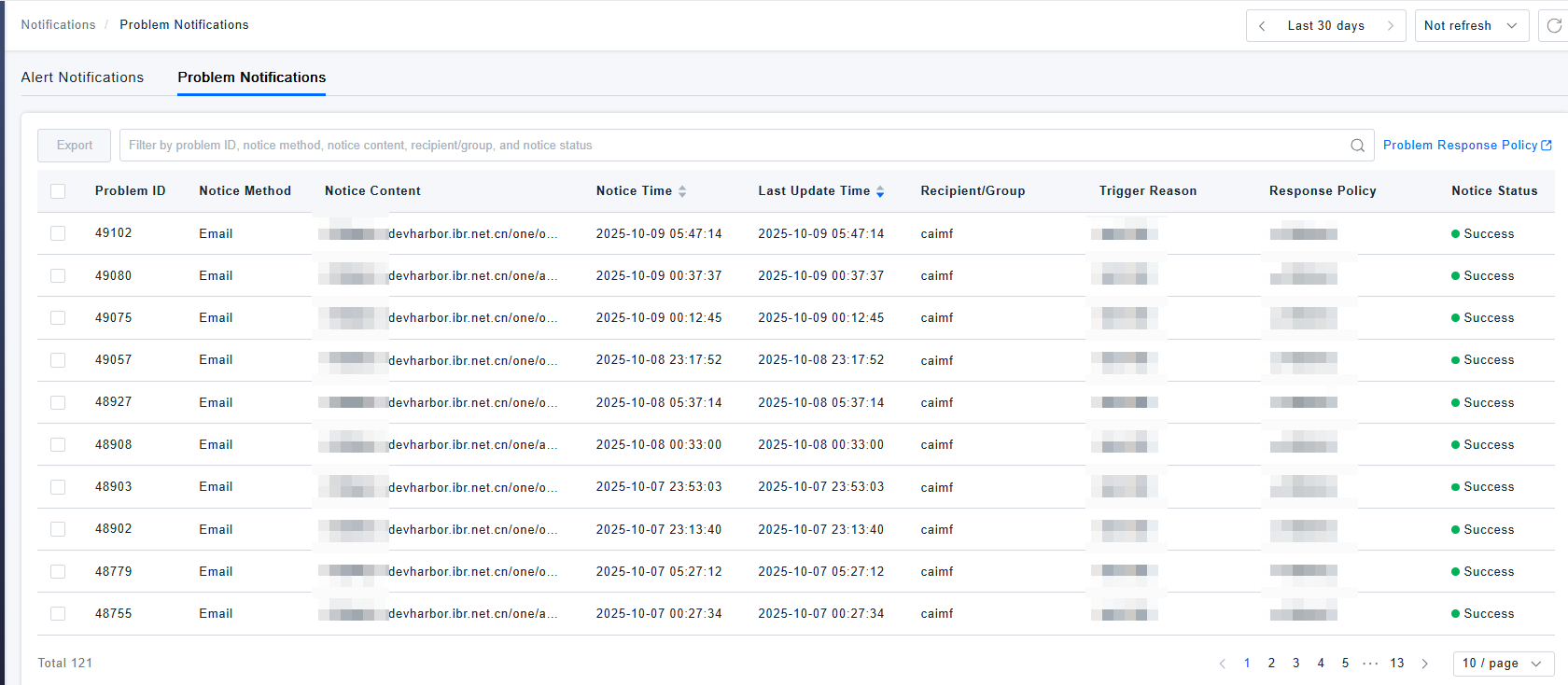
The Problem Display Module is the core information hub of the emergency response platform. After alert data is aggregated and processed by convergence strategies, it is responsible for the unified display and full lifecycle management of the resulting "problems," focusing on a higher-level business impact perspective.
As the core of the module, the Problem List and Details centrally present all active and historical problems in a list format. Each problem card clearly displays key information and supports user drill-down to view the original alerts associated with the problem, affected upstream and downstream dependencies, and detailed contextual metrics, facilitating problem root cause convergence and in-depth analysis.
The Problem Notification Records provide a complete audit trail for problem-level notifications, meticulously documenting each notification's method, specific triggering reason, status, and time, ensuring traceability of information delivery throughout the problem response process.
Aggregation and Noise Reduction for Improved Response Efficiency
By consolidating multiple related alerts into a single problem through convergence strategies, noise is effectively filtered out. This enables the operations team to quickly focus on core failures that truly impact the business, avoiding distractions from a large volume of low-level alerts, thereby enhancing emergency response efficiency.
Enhanced Root Cause Identification and Impact Analysis
The module deeply associates problems with affected services and interfaces while providing rich contextual information. This allows the team to rapidly understand the technical scope and business impact of issues, accurately pinpoint root causes, and effectively reduce the Mean Time to Repair (MTTR).
Building an Auditable Emergency Closed Loop
Detailed problem notification records ensure that critical issue information reaches the relevant personnel through standardized processes. By documenting details such as the "triggering cause," the entire emergency response process becomes transparent and traceable, providing data support for process optimization and accountability clarification, thereby facilitating the establishment of a mature operations governance framework.