Alert Display
Overview
-
The alert display module serves as the core information hub of the operational monitoring platform. After alert rules are configured and data is ingested, it is responsible for the unified real-time display and lifecycle management of generated alerts and notification information.
-
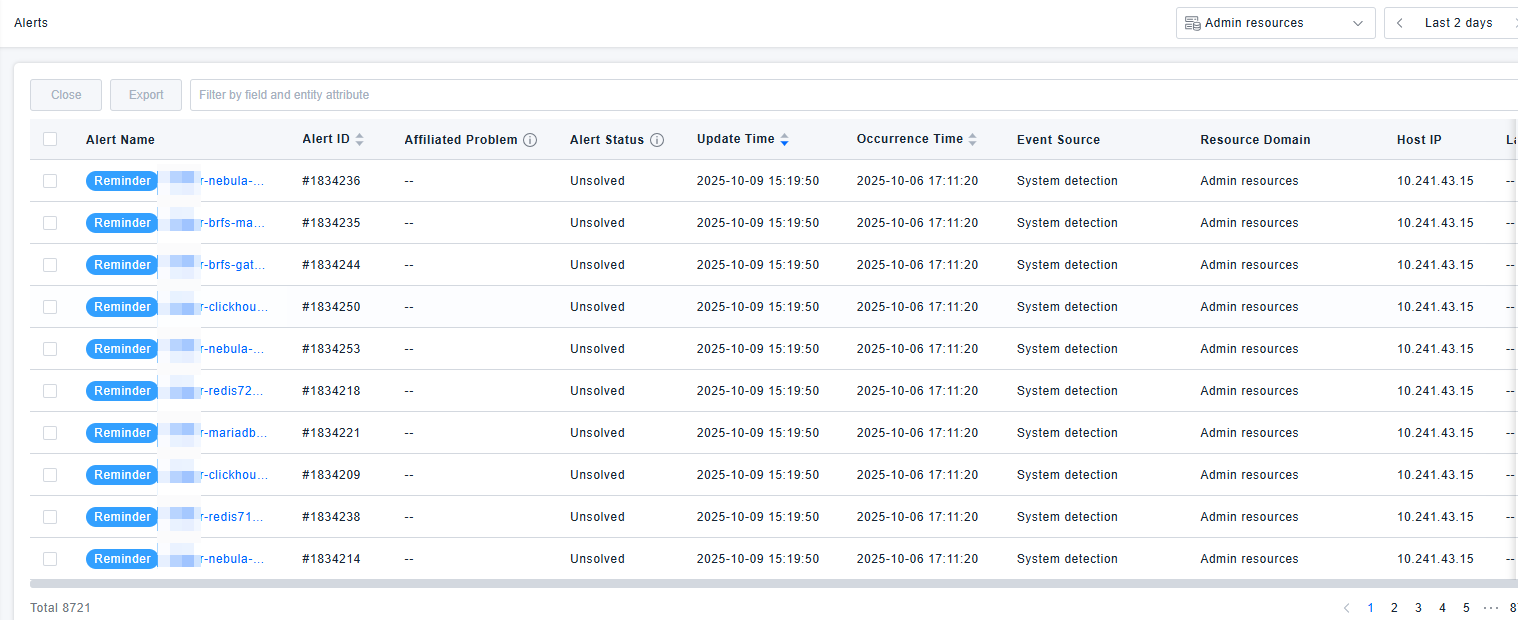
The alert list and details, as the core of the alert display module, centrally present all active and historical alert events in a list format. Each alert provides key information and associated business resources, supporting users in drilling down to view detailed context and metric data, while also enabling in-depth analysis.
-
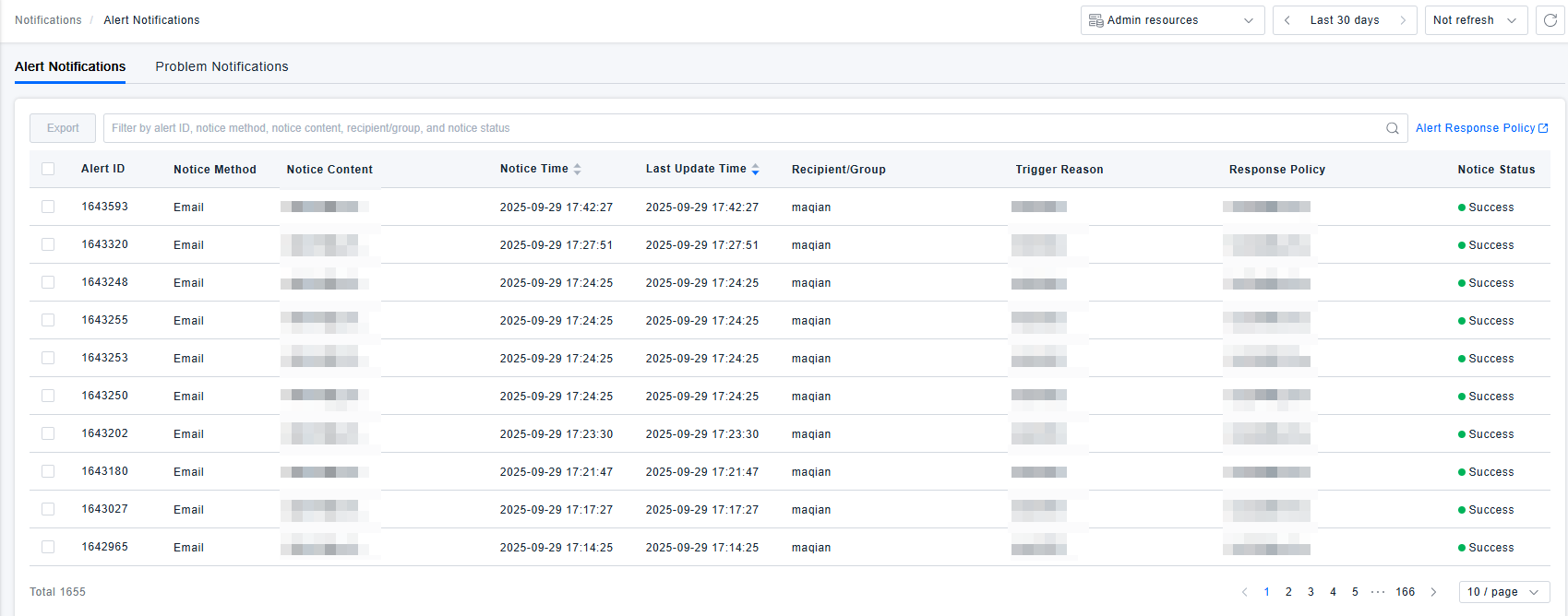
The alert notification records provide complete audit trails of notification delivery, meticulously documenting each alert notification's method, content, time, status (success/failure), and specific triggering reasons, ensuring full traceability of the notification process.
Value
- Centralized Monitoring & Enhanced Situational Awareness By consolidating alerts from diverse resources into a single view, it provides the operations team with a "single source of truth" for system health status. This significantly enhances the team's awareness of the overall system situation and eliminates the inefficiencies of switching between multiple platforms.
- Accelerated Troubleshooting & Root Cause Identification Through deep integration of alert details, related metrics, and visual analysis capabilities, it provides engineers with rich contextual information. This enables them to quickly understand the business impact behind alerts and accurately pinpoint the root cause of failures, thereby effectively reducing the Mean Time to Repair (MTTR).
- Guaranteed Information Delivery & Strengthened Process Closure The notification records feature not only ensures that critical alerts are reliably delivered to the relevant personnel through multiple channels but also documents details such as the "triggering reason," making every notification traceable. This strengthens the accountability of the alert response process, helps teams continuously optimize their notification strategies, reduces false positives and noise, and ultimately builds a transparent, auditable operational closed loop.